
An interview with Laura Stanfill
Opening doors, building community, and making a nonlinear multi-career path through publishing

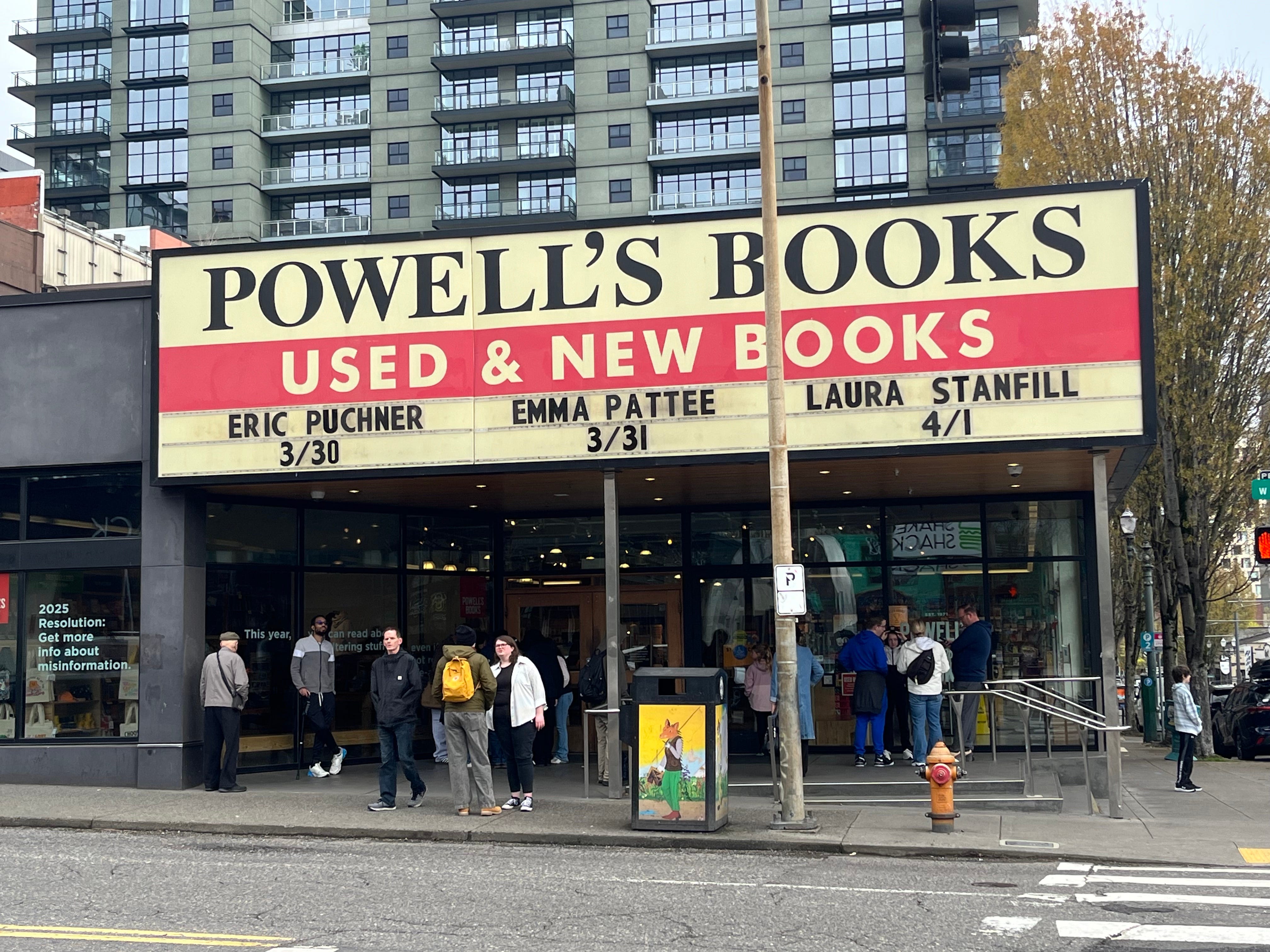
If you’ve spent time in the Portland, Oregon literacy scene, you probably know of Laura Stanfill. She is the publisher at Forest Avenue Press, a writer of both fiction and nonfiction, and a tireless community-builder.
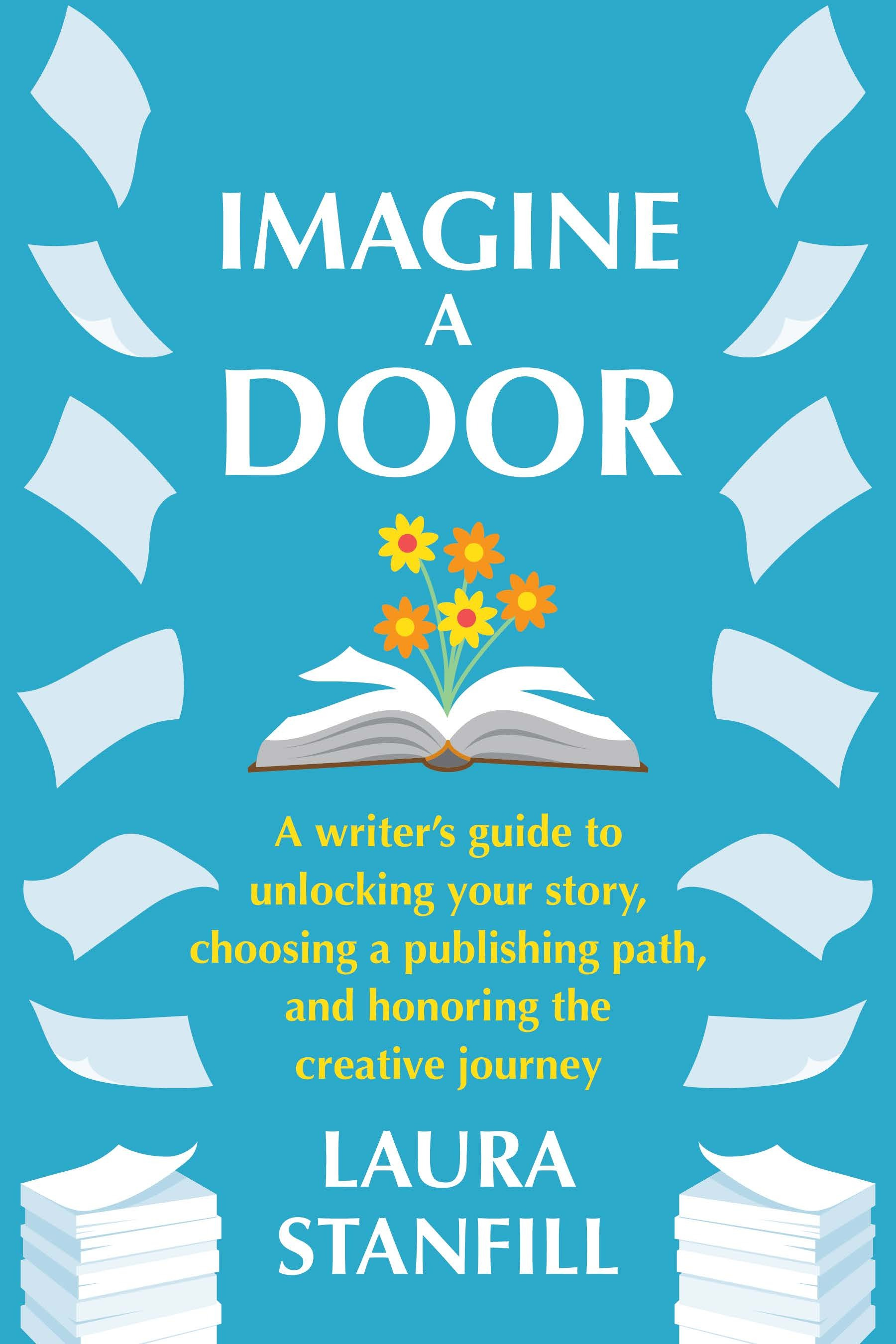
Her book Imagine a Door was released this spring, and it’s an incredibly rich source of information about the publishing world, especially for anyone who feels like an outsider.
Imagine a Door also has a special place in my heart because Laura hired me to write the index for it! Last fall, when I was just starting up my indexing business and still learning, she was upfront about why she wanted to work with me.
“Working with you fits my mission of making opportunities in the lit world. It's very Forest Ave to go this route!”
I mean, how generous is that?
Imagine a Door is another 500+ page indicator of her great generosity of spirit. If the publishing world mystifies you, and you want in, I hope you’ll read this book.
I interviewed Laura about opening doors, nurturing community, and building a nonlinear, multi-career path that fits her life.
Let's start at the beginning! Could you tell me a little bit about your experience with Forest Avenue Press? When did you found it, and how does it operate?
We are a traditional, advance-paying, royalty-paying press. I started Forest Avenue in 2012 in Portland, Oregon, because I had little kids and I needed an intellectual project to keep my brain happy. Publishing local writers and building another home for novels matched my professional skillset and challenged me to take a more active role in publishing. I’ve always been an avid reader and writer, but jumping into the book-making process taught me a lot. In 2014, my press earned full-service distribution and we opened to national submissions. Having distribution has helped us fulfill authors’ dreams of getting their books into bookstores.
We publish one to three titles a year, because that allows me to give my authors the kind of support I think they deserve. We usually open for unagented submissions once a year; with so few openings in our catalog, a year-round open door process doesn’t make sense. I can’t tell you how many people try to argue themselves over the transom! Belligerence doesn’t sell a manuscript, I promise.
Why did you write Imagine a Door?
The propulsive thought behind the project was this: the lack of transparency in this industry causes writers to take lots of the hard stuff personally. Moreover, the people who are privileged enough to pay for agent/editor access at conferences have a significant advantage over everyone who cannot physically or financially participate in those spaces. I wanted to pull together information about the writing life, submissions, and how publishing works to increase access to it.
I started interviewing experts—agents, publishers, and authors—in 2016, because I had the kind of access that most writers don’t. As a new publisher and a former journalist, I could ask questions and pull that reporting together into a manuscript. Sharing those voices and the behind-the-scenes experiences of Forest Avenue, within the frame of a book, felt like a way to get genuine information out to people who might otherwise not be invited into these conversations.
That early draft didn’t hold together, though. I hadn’t put myself in it, other than wearing my journalist hat and asking questions. Once I decided that my experience writing novels and trying to publish them belonged in the text, that personal thread became the emotional center of the book, alongside my efforts to build a publishing program at Forest Avenue. As the author of Imagine a Door, I’m the expert, but I’m also the young writer fielding rejections, afraid to have a real conversation with my first agent, and trying to get New York editors’ attention. Allowing as much space as I needed—ha, it’s over 500 pages—means I can share the hard, scary stuff alongside the eventual successes.
What helps you to stay focused on the joys of the writing process rather than the far-off end goal of publishing?
Playfulness, curiosity, wonder, and the friendship of other writers!
I write long, and I revise each project for years. Sometimes I get bogged down and walk away for months or years. My debut novel, Singing Lessons for the Stylish Canary, took fifteen years, but a lot of that time was walking away, writing a new novel, parenting, and learning how to be a parent. The active writing time, at least a decade of it, was dedicated to revising based on feedback, some of which didn’t align with my vision and I tried it anyway.
The manuscript Lanternfish Press published in 2022 aligned better with my original goals than a lot of the intermediary versions, where I chased agent approval and made massive shifts in the story in the hopes one revise and resubmit would pan out.
If what I’m working on doesn’t delight me, I am not focused on the right project. -Laura Stanfill
I think now, at midlife, I’m better at searching out the joy instead of obsessively committing to slogging through another draft in search of acceptance. If what I’m working on doesn’t delight me, I am not focused on the right project. This may be why I’ve slid into writing middle grade fiction so seamlessly. I’m having the best time working on this new novel, currently titled THE SNITCH OF TOWN TOWNSHIP! And I can center my storyline on the meaning of art, what it means to be different from your classmates, and the repercussions of restrictive adult thinking.
As a writer and a publisher at small press, you have experience doing everything! And I love your DIY mindset so much. Do you have a favorite part of the writing process? A favorite part of the publishing process?
Ooh, the writing process! I’m a huge fan of revision, but since I tend to revise for years, there are lots of less-fun times mixed in with those moments of clarity. So I’ll say writing the first draft. Drafting can be one moment of elation after the other, as characters barge into my intended story and change its course. More than plot, though, I love creating the sound of the novel—figuring out what words belong, how to use point of view, and how my protagonist’s language usage fits with the larger society around her.
My favorite part of the publishing process is the developmental edit, which is the big-picture edit. When I fall in love with a manuscript during open submissions, I’m reading for story. I have to know what happens next! Once we’ve signed a contract, and I’m feeling that just-signed jubilance, I put my love for the work into my comments. I mark the sentences and moments that take my breath away, while also engaging with a more critical eye. I recently finished the DE for Vincent Chu’s NICE PLACES, forthcoming in spring 2026, and he wrote me some really sweet notes about feeling like I had noticed and appreciated parts of his book that he didn’t know if anyone would ever appreciate. While it’s a creative process, editing a writer’s manuscript at the big-picture stage, it’s also where I try to build trust, and that becomes the foundation of our author-publisher relationship.
Writers often feel like outsiders to the publishing world. Do you have any words for writers who question whether they belong/whether their voice matters? (I’m just realizing the answer to this might be the whole book!) If you had to sum up your advice in one sentence, what would it be?
Your work matters, regardless of whether it’s published, but it matters most when nobody else but you could have written it.
And I think you’re right, Alyssa; the whole book is my answer to this one!
You emphasize community building in Imagine a Door. What actions would you say most supports the writing community? And what actions most damage it?
We are in this together, practicing an art form that moves much more slowly than the pace of social media, and we are all hoping someone will slow down enough to read our work. To actively, intentionally engage with the brave stories we’ve put on the page. Anything you can do to help other writers builds community. There’s so much joy and solace in sharing your process and your setbacks with fellow writers. Sharing pages can be extremely valuable, whether in a writing group or an occasional trade. Connecting with others is also part of building rejection resilience; you can talk about the industry, the limited opportunities, and how you push through every no to submit someplace else. When we talk about our setbacks, and not just our success, we’re being real with each other, and that’s so important in a time of flashy “look at me” content.
What damages the community is competition and trying to tear other writers down. You don’t have to love everyone’s books to support them. Show up at an event, share a link to an interview, or take a photo of the book at the local bookstore. Every time you do that, especially when you do that for a writer you don’t know well, you’re strengthening the community. Also: think about how to bring people in, instead of keeping them out. If you’ve got information you can share with other writers, whether it’s about a specific agent’s taste or something you learned from your developmental editor, that’s a great way to be supportive. If you sit next to someone at a reading, and you introduce yourself, that’s an easy opportunity to build community in the real world, not just online.
How has the feedback to this book been? Has anything surprised you, or have you learned anything new since publication?
A few people have turned up at events with copies full of Post-It notes! That’s floored me. To see my work being used as the resource I wanted it to be. I’ve seen writers pick it up off the shelf and say something about its gigantic size—your index is one of my favorite parts of its 522 pages!—and occasionally I blush or say “Yeah, I write long.” But the truth is that I don’t regret any of the stories or interviews I put in the book. All those voices matter, and my personal journey ties the whole thing together. It’s the opposite of the guides that promise you success in five easy steps, or whatever, because it has not been easy! In the book, I share many of my rejections and career missteps and how, even at this midcareer stage, I struggle with self-doubt. It’s disingenuous to only show the fun parts, which is a temptation in this age of social media and platforms.
Some of the content will resonate with each reader more than others, and when I’ve seen those marked-up copies, it’s like a confirmation: what’s in the book is important. The fact that it doesn’t promise answers or success feels important too; the writing is always what matters, and where you place a piece is a separate question.
Is there anything that’s changed for you between the writing of this book and the publication of it?
Over the course of writing Imagine a Door, I’ve become more open about identifying as disabled, and I think that perspective is often sidelined or relegated to one anecdote or interview with one disabled writer. While my book isn’t a memoir, my physical and neurodifferences have impacted every step of my journey as a writer and publisher.
What are you working on now?
I’m working on my first middle grade novel, and I just sold my second adult novel, THE NEIGHBORHOOD DAMES, to Ooligan Press! It’s forthcoming in fall 2026, and I’m deep into developmental edits this month.
Where can we buy your book/find out more about you and your work?
Find any of my books at your local independent bookstore, or if you don’t have one, bookshop.org. Singing Lessons for the Stylish Canary and Imagine a Door are also available in audio through libro.fm. You can find me at laurastanfill.com, on Bluesky, and on Substack.
Thank you, Laura!
Thank you for this brilliant and affecting interview, Alyssa. My head just kept nodding as I read it.
Thanks, glad to discover such a valuable resource!